Mining Camps in Chile: Their Evolution Over the Past 35 Years
By Svitlana Slusarenko · Architect Developer at ARCHIPLAN. Mining specialist.
From Precarious Infrastructure to Livable Spaces
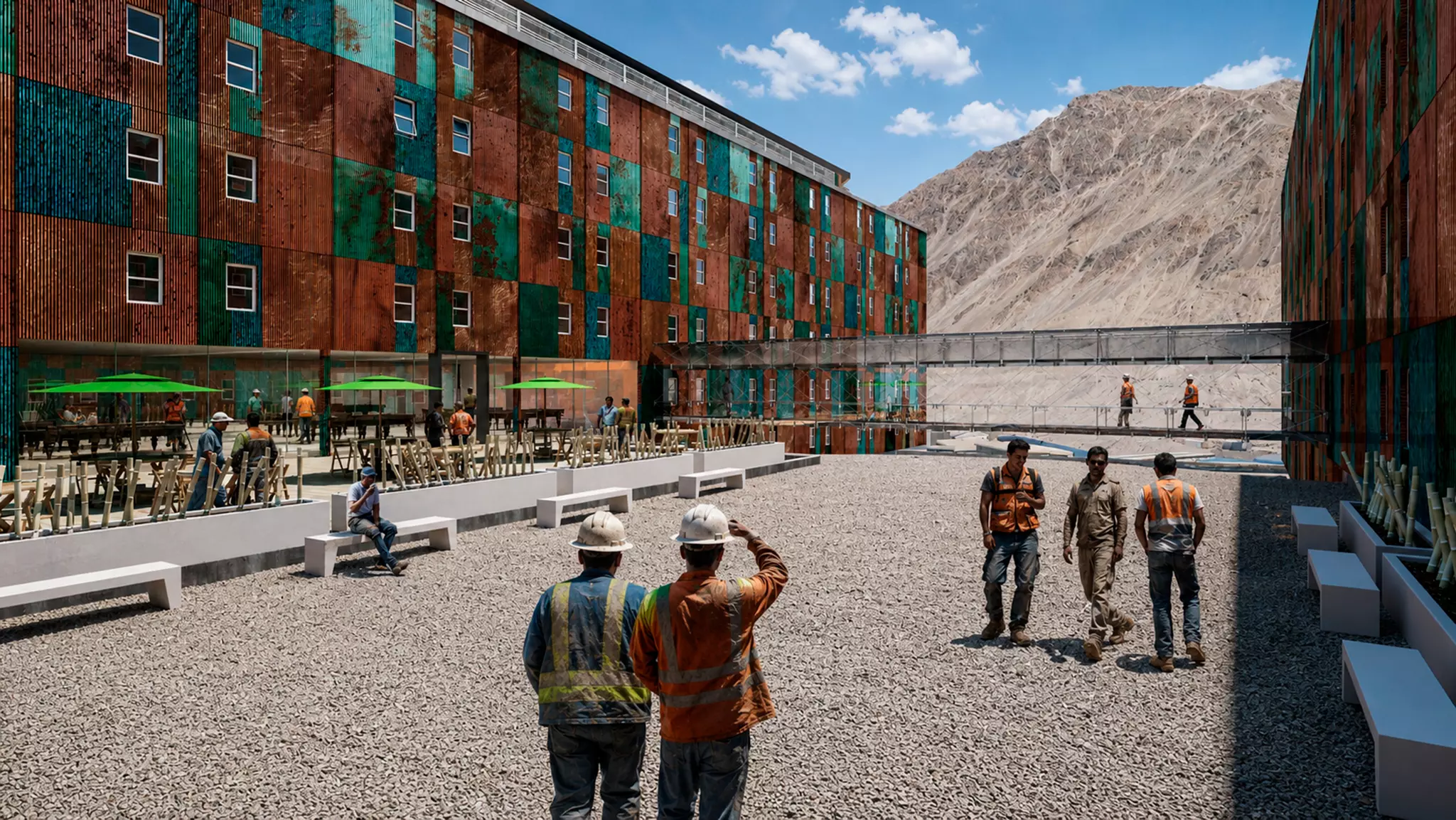
Mining camps in Chile have changed radically over the past three decades. What was considered a temporary living space in the 1990s—with basic infrastructure and minimal standards of comfort—is now a strategic part of mining operations: spaces designed to ensure rest, livability, health, and operational continuity in some of the most extreme environments on the planet. The first modern camp, as we understand it today, did not appear until 1990, when Minera Escondida built Villa San Lorenzo in the Antofagasta Desert. Before that, there were iconic mining towns such as Sewell, Chuquicamata, Humberstone, and Lota, but those were complete towns: they included families, schools, squares, and churches. The temporary, modular camp, designed for shift work and temporary stays, is a much more recent solution within Chilean mining architecture.
What mining camps were like in the 1990s
To understand the transformation of mining living conditions in Chile, we spoke with Leonardo López, Project Manager at BHP Chile, who has worked on mining projects for over 30 years.
“I remember, almost 30 years ago, when I started out during the mining boom of the 1990s. The working conditions were good, but the infrastructure was poor: the quality of construction, the ventilation and heating systems, and even things as simple as the bedding. On my first project, the four lead professionals from the contractor’s team shared a single room with a single bathroom. You don’t see that anymore.”
At that time, shift schedules could last for 21 consecutive days on the job. The climatic conditions in northern and southern Chile—with high daytime temperatures, extreme nighttime cold, and geographical isolation—made it clear that living conditions directly impact workers’ health, rest, and productivity.
The regulations that transformed mining architecture in Chile
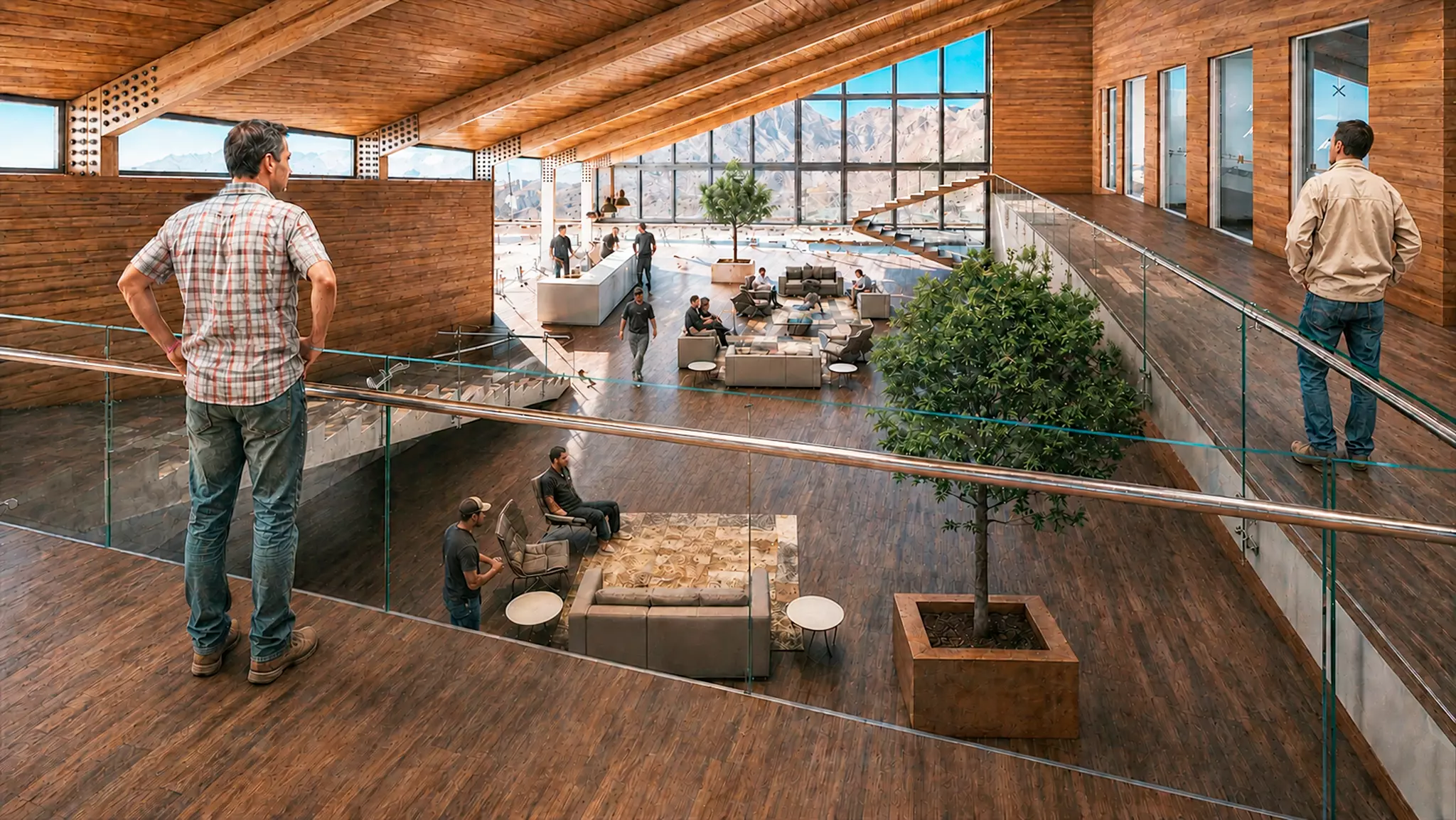
Common area at Los Bronces mining camp, designed as a space for workers to meet, rest, and socialize. ARCHIPLAN.
The evolution of mining camps was not limited to technological or structural advancements. It was also driven by new environmental and health requirements.
Law 19.300 and Environmental Impact Assessment of Mining Projects
Law 19.300 on General Environmental Principles, enacted in 1994, established the Environmental Impact Assessment System (SEIA). Since 1997, every mining project in Chile, including camps and support infrastructure, must be submitted to the system before construction begins.
This completely changed the way mining facilities are designed, incorporating variables such as environmental impact, water consumption, sanitation, and operational sustainability.
DS 594/1999: The Most Significant Change in Mining Living Conditions
Supreme Decree 594/1999 of the Ministry of Health, effective since April 2001 and subsequently updated by DS 123 in 2014, established mandatory minimum standards for work facilities and camps. Among them:
- Separate dormitories for men and women
- Indoor temperatures between 10 °C and 30 °C
- Minimum ventilation per worker: 10 m³ of air
- Guaranteed drinking water: at least 100 liters per person per day
- Fully equipped restrooms with hot and cold water
“DS 594 revised the square footage and occupancy limits for rooms. Where four people used to sleep, only two or three were allowed. This improved the space, insulation, and construction quality. Everything became more modular and efficient.”
These requirements transformed mining architecture in Chile, driving the adoption of industrialized, modular solutions with a greater focus on human well-being.
The pandemic and the new standard for mining camps
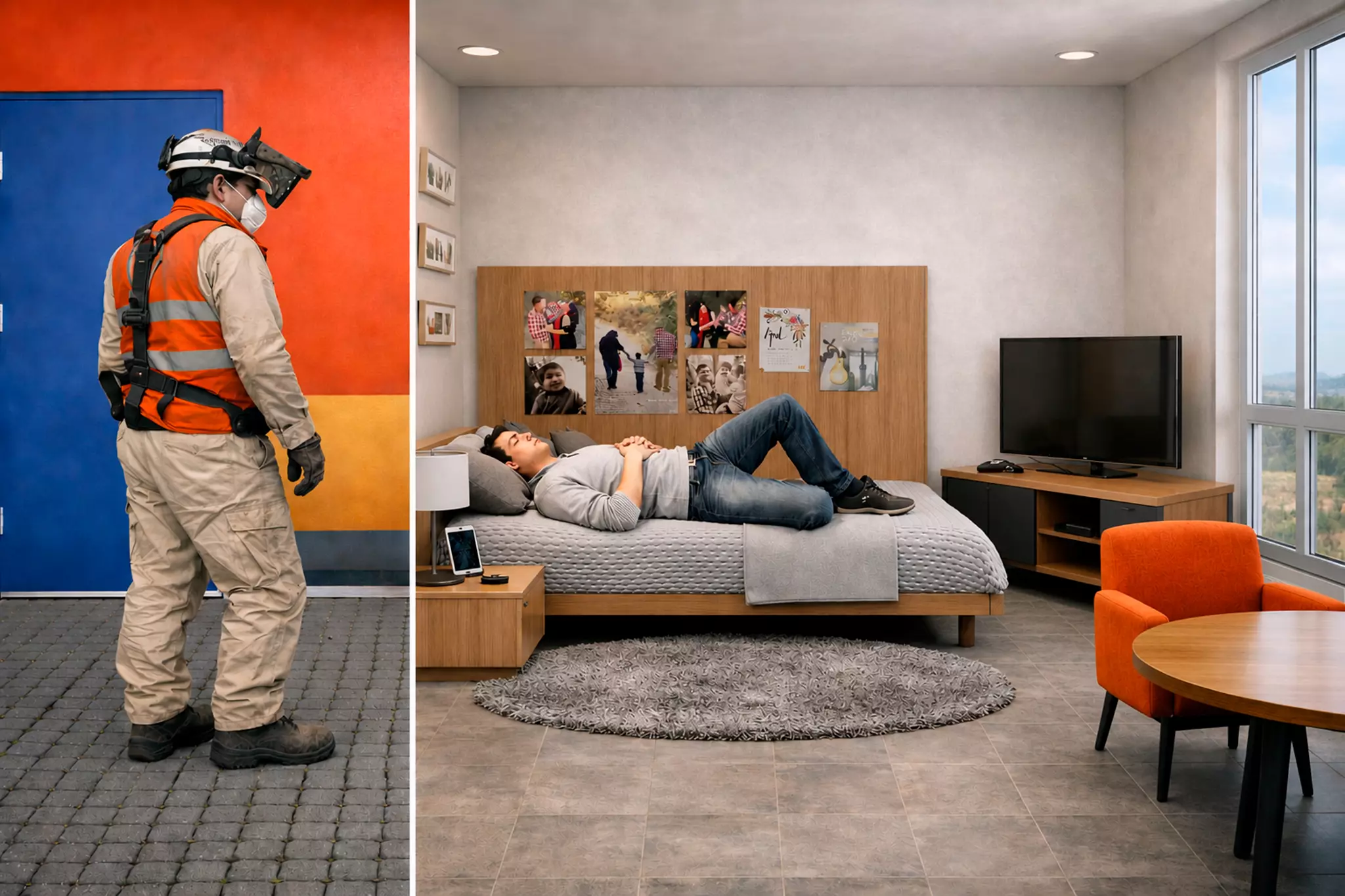
Visual representation of the new standard for mining camp accommodations, developed as part of the MonoX research publication, which proposes criteria for evaluating and designing these spaces with a focus on the quality of life of their residents. Based on research by Archiplan and the UC research center.
The COVID-19 pandemic accelerated another profound change. Mining companies were forced to implement health protocols that altered the layout of dormitories, cleaning systems, and occupancy density.
Today, in most Chilean mining operations, the maximum standard is typically two people per room, with stricter requirements for hygiene, ventilation, and privacy.
The pandemic cemented a trend that was already gaining momentum: viewing the mining camp not as a place of sacrifice, but as a livable environment capable of supporting physical health, rest, and operational performance.
“With the pandemic, we basically switched to single rooms. When we tried to go back to the way things were, people didn’t take to it so easily.”
Mining camps today
Today, mining camps in Chile represent a transformation that demonstrates how architecture and engineering can turn extreme environments into livable, sustainable communities: they are no longer simply isolated lodgings, but true cities with quality basic services, digital connectivity, sports facilities, and decent recreational areas—capable of attracting talent and providing a high quality of life amid unique landscapes such as the high Andes and the Atacama Desert.
ARCHIPLAN and the Evolution of Mining Architecture
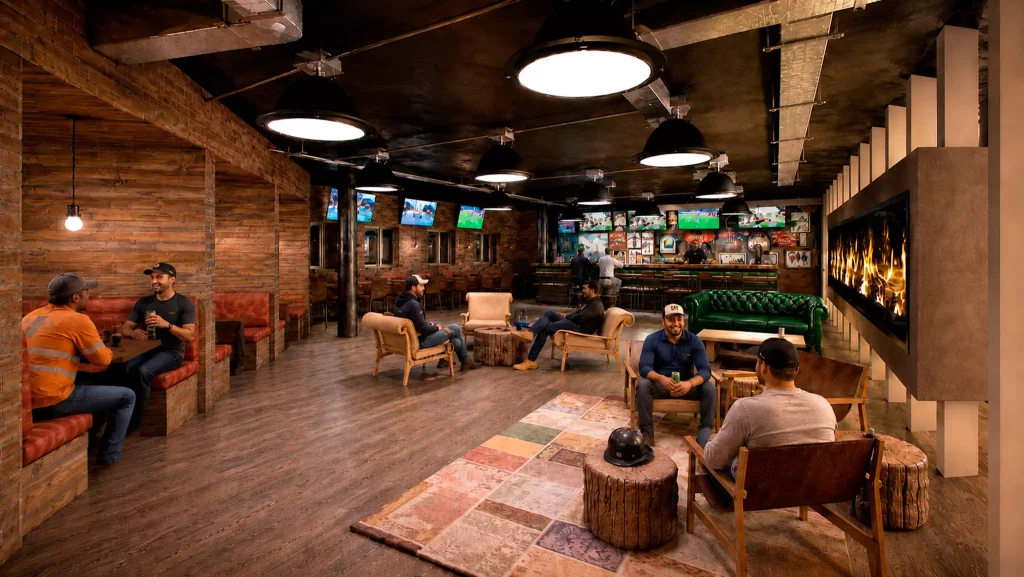
Design of the sports bar for the Collahuasi mining camp, conceived to provide a welcoming atmosphere that combines relaxation, recreation, and socializing among colleagues. ARCHIPLAN
At ARCHIPLAN, we have been developing specialized architecture for the mining industry for 18 years and have witnessed this transformation firsthand: from shared dormitories and basic solutions to modular infrastructure designed to meet increasingly stringent technical, health, and human standards.
In 2018, we participated in the research publication MonoX alongside the UC Innovation Center. This document proposed methodological criteria for evaluating and designing camps with a focus on the quality of life of their inhabitants, based on interviews, case studies, and recommendations applicable in extreme conditions.
Today, designing mining camps involves much more than simply complying with regulations: it means designing spaces capable of supporting rest, well-being, and productivity in highly complex operations. This evolution demonstrates that the mining camp of the future will not be defined solely by its square footage or operational capacity, but also by how its architecture contributes to the quality of life of those who inhabit it.
Svitlana Slusarenko
Architect Developer at ARCHIPLAN, with over 15 years of experience leading complex engineering, mining, and bidding projects.